Leadership & Management
Still Waiting for the "Big Idea"?
There is a dangerous myth about entrepreneurship. It paralyzes capable people.
We believe building a product requires a moment of divine clarity. Locking yourself in a room. Staring at a whiteboard. Waiting for a lightning strike called The Big Idea.
But that moment rarely comes.

I did not build my SaaS platform, STRASYS, because of a moment of clarity.
I built it because I looked back at 20 years of accumulated problems and realized I had already built the pieces. I just had not connected them yet.
If you are trying to figure out what to build, stop looking forward. Look backward.
The Level 1 Illusion
When I left my corporate role as a Vice President managing large regions across EMEA, I walked into uncertainty. The economy in Türkiye was shrinking. Companies were cutting costs. It was objectively the worst time to start something new.
I had only a vague direction: Build a digital product.
But here is the trap most people fall into. We compare our Day 1 with someone else’s Year 10. We try to visualize the Level 100 version of our company before we even build Level 1.
Building a company is like starting a strategy game. At Level 1, the map is covered in fog. Your base is small. Resources are limited.
You cannot see the fortress you will eventually build. You build one structure, then explore, then learn, then adapt, then expand.
Complexity reveals itself gradually, then exponentially.
If I had tried to design the full STRASYS architecture on Day 1, I would have quit. Instead, I started with what I already had: 20 years of collected experience.
Excavating the Archive
Every feature in STRASYS today is not a new idea. It is a solution to pain I personally experienced years ago. I did not invent them. I rediscovered them.
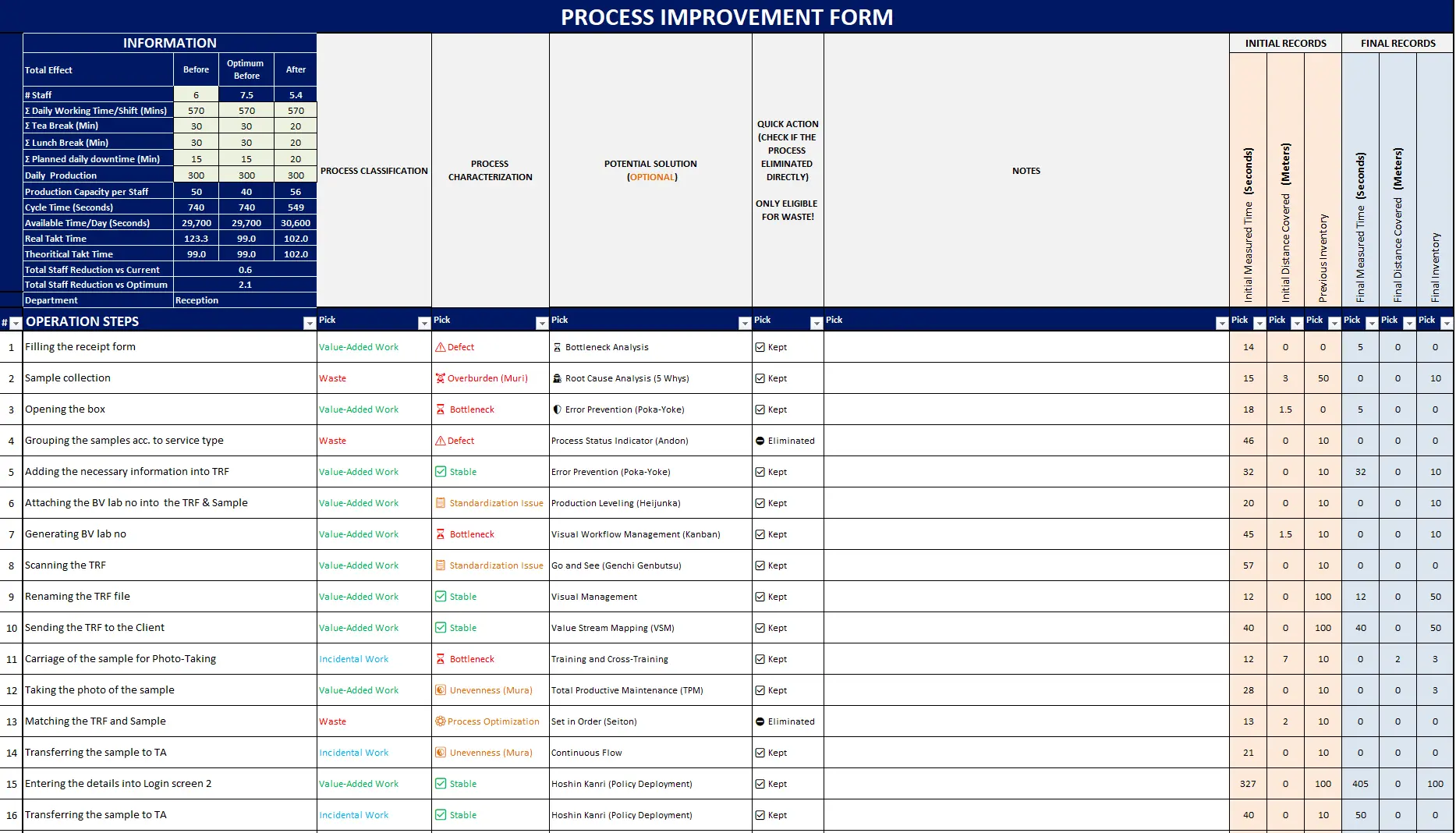
Fifteen years ago, after a three day Lean training in China, I was afraid I might forget the methodology. So that night in my hotel room, I built a simple automated Excel sheet. That spreadsheet later became the earliest ancestor of our Lean Six Sigma engine.
Below is the improved version of the process improvement form I originally designed in December 2014.
Over time, its structure and methodology evolved and eventually became the foundation of the STRASYS Lean Six Sigma module. What began as a simple operational tool gradually transformed into a system.
The PDP Module 8 years ago, a manager asked me for help designing development plans. I built an automated system. It worked so well it was rolled out globally.
The Succession Module As a VP in a high-attrition industry, succession planning kept me awake at night. Who replaces critical leaders? Who is ready? That recurring anxiety became the logic of our Succession engine.
The EQ Mirror My pharmaceutical background exposed me to Cultural Excellence models. I learned a hard truth: A leader’s self-image rarely matches the team’s lived experience.
For 20 years I thought I was building a career. In reality, I was collecting data.
The Pattern Behind Real Innovation
During MIT’s User Innovation & Entrepreneurship Training, one idea stood out: the most meaningful innovations rarely begin in brainstorming rooms. They begin with personal frustration, problems people experience deeply, repeatedly, and cannot ignore.
When a problem becomes persistent, unresolved, and personal, it turns into obsession. And obsession is what drives real invention.
History reflects this pattern everywhere. Dyson built his first prototype after years of frustration with inefficient vacuum technology. Lamborghini was born from dissatisfaction with Ferrari.
Many breakthrough products were not imagined in theory, they were forced into existence by unresolved pain.
STRASYS followed the same path.
For years, I experienced a persistent gap in leadership reality: executives were expected to make complex, high-impact decisions, yet they had no unified system to support them.
Tools existed, reports existed, frameworks existed, but everything was fragmented. Leadership was carrying the weight of complexity without a true operating system.
STRASYS did not start as an idea. It started as a necessity, a response to years of accumulated friction, fragmentation, and unanswered operational pain.
The Pivot: From No-Code to Architecture
When I left corporate life, I refused to create a Plan B. Plan B makes it easy to abandon Plan A when things get hard.
I began building STRASYS using AppSheet, a no-code platform. First PDP, then Lean, then Performance, then EQ. In just three months, a powerful system emerged.
But it was fragile, like building a skyscraper from wood. No-code could not support the level of complexity or ensure the data integrity required for what I was building.
The reason no-code failed was simple: it could not handle systemic complexity, enforce data integrity, scale with architectural growth, or evolve from a collection of tools into a true system.
So I made a painful decision. I scrapped everything and rebuilt STRASYS as a full SaaS platform. That was the moment it stopped being a tool, and became a living system.
The DNA Theory of Product Design
This is the core philosophy behind STRASYS. DNA is built from five simple elements: Carbon, Hydrogen, Oxygen, Nitrogen, Phosphorus.
Individually: ordinary.
Structured: life.
DNA stores roughly 200,000 terabytes of data per gram. Because of its structure, it is not just efficient, it is orders of magnitude beyond modern storage systems, hundreds of thousands of times more efficient by mass and volume.
Most companies operate like isolated elements. One spreadsheet for HR. One for Finance. One for OKRs. One for Performance. They exist, but they do not live.
STRASYS is the DNA. We unified six core leadership and execution modules into a single structure. When systems unify, hidden patterns become visible.
MRI vs X-Ray: Seeing the Invisible
Most organizations operate using isolated signals. Finance sees growth. HR sees cultural decline. Operations see process inefficiency.
Separate X-rays create no systemic view.
So we built the Horizon Performance Index. It correlates financial performance, leadership maturity, and process strength.
Example: A country hits 105% financial performance and looks successful. But EQ and process maturity score is 60%. The system flags: “Unsustainable, results not backed by behavior.”
Another country shows 114% performance and 90% EQ. The system verifies: “Sustainable growth.”
Individual modules show signals. Integrated intelligence shows truth.
Individual modules are X-rays. STRASYS is a 3D MRI of organizational reality.
The Real Lesson: Just Start
If you are 25, 35, or 46 and wondering what you should build, stop searching for the future.
Open the archive of your past. What frustrated you years ago? What small tool did you build to solve it? What problem keeps returning in your life?
The dots already exist. Your job is not to invent them but to connect them.
You do not need to see Level 100.
You just need to press Start.
Clarity comes after movement.
You are standing at the foot of a mountain, frustrated because you cannot see the view from the top before you even begin to climb.
But progress is a process.
- You start from the first step.
- Each level reveals a new horizon.
- Each height shows what was previously invisible.
- You cannot skip the first step and arrive at the tenth.
This is why people say starting is half of finishing.
Because with every step, you encounter challenges you never anticipated, and each one shapes the path forward.
Most people wait for clarity. Builders create it.
The future is not discovered. It is assembled.
STRASYS began when I stopped searching, and started connecting.
STRASYS-The Operating System of Organizational Intelligence
From fragmented tools → to one coherent system
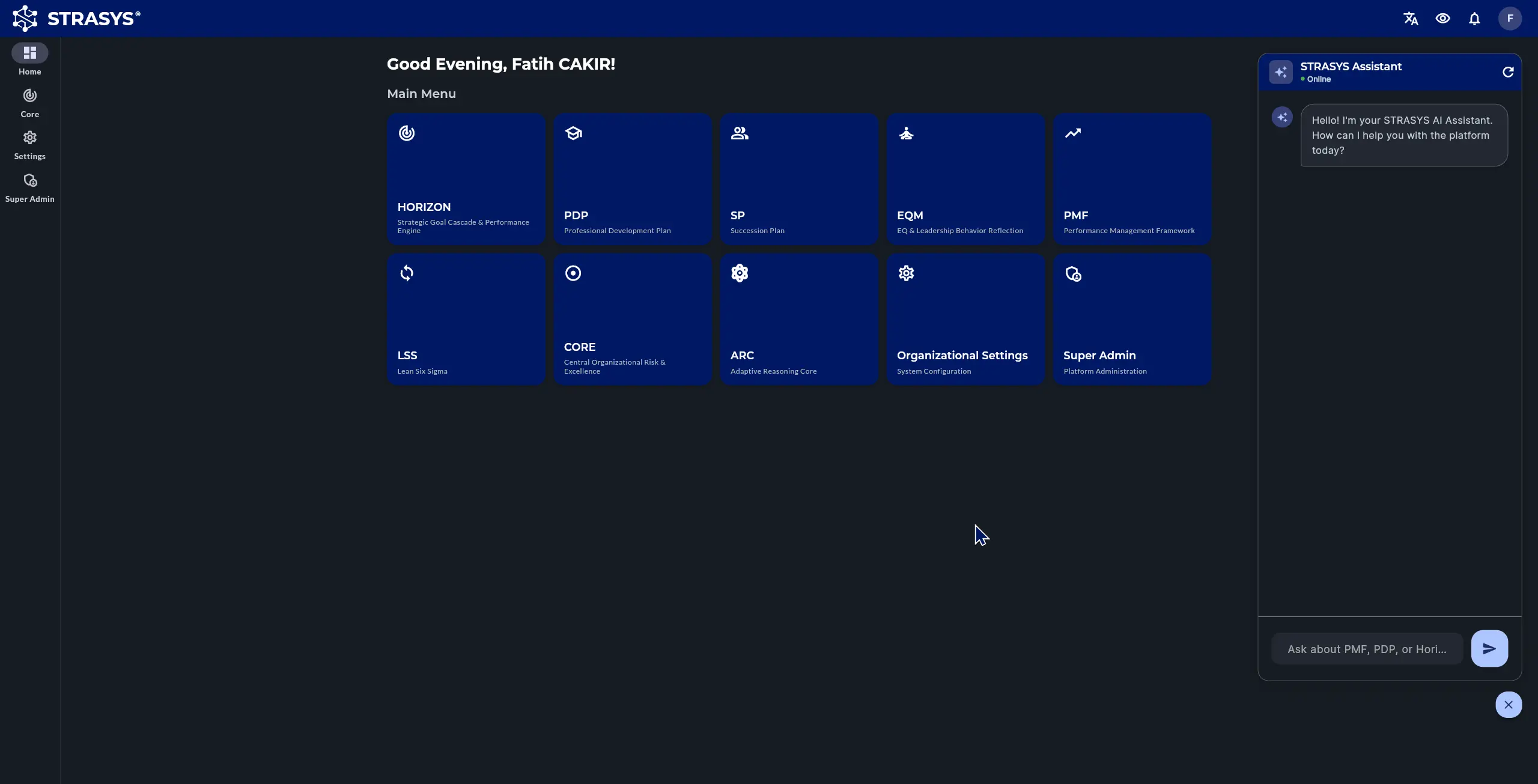
Stop managing scattered data. Start managing Organizational Intelligence with STRASYS
#OrganizationalIntelligence #LeadershipOperatingSystem #STRASYS #ExecutiveLeadership #ManagementSystems
.svg)
.webp)



.svg)
RETURN TO TOP🔝